- University of Iowa
- Harvard
- Yale
- Brooklyn College
- Columbia
- Stanford
- State University of New York
- University of California San Diego
- University of Massachusetts Amherst
- Villanova University
- University of Oklahoma
Wednesday, June 24, 2009
A Future in Dramaturgy
These schools in the U.S. offer MFAs in dramaturgy: link

Friday, June 19, 2009
Online Indiana Jones Treasure Hunt Adventure
2. 1906 Berlin set design by Karl Walser

3. The original English production of Spring Awakening premiered in 1917 in New York City, but was closed after one night after changes of obscene content.

4. "As species go, the rock star is relatively young. Carbon dating has fixed its emergence from the primordial ooze of postwar pop at sometime in the 1950's, somewhere in the continental United States. So it is disorienting to find the 19th-century German schoolboys in the new musical "Spring Awakening" yanking microphones from inside their little woolen jackets, fixing us with baleful gazes and screaming amplified angst into our ears." -Charles Isherwood The New York Times
5. Off-Broadway version had a Masked Man (a similar ending to the original).
6. Kansas City Oct. 13- Oct. 18 at Music Hall $25-$100.
7. There is an amateur production edition of Spring Awakening available through MTI.
8. Negative review. "For decades now it has been unfashionable, or fashionable only in unfashionable circles, to consider art in moral terms. This reluctance is an understandable (if superficial) reaction by aficionados faced with encroaching cultural fundamentalism, a habit that confounds moralism with morality. Morality with its legion conundrums is still very much with us, whether we like it or not. What has happened, though, is that moralism rushes in (with its mega-churches and mega-musicals) where morality fears to tread. SA the Musical is not mega by Broadway standards but it is moralistic, and its moral blind spots give rise (as such blind spots always do) to artistic problems, plot problems, even logical problems that require no special training to discern. In adapting the play, the musical's director and producers kept Wedekind's central, infamous rape scene. Somewhere between Chelsea and Times Square, however, they changed it from one of disturbing or at least uncomfortable quasi-forced sex (as played off-Broadway) to one of missionary-position love-making (as played on Broadway). Christopher Isherwood surmised in his Broadway review that "only scholars are likely to care that a key plot turn, a sex scene with the central female character, the pubescent Wendla Bergman (Lea Michele), has been thoroughly softened from confused ambiguity into a consensual act." Confounded again, morality is thus "thoroughly softened" into moralistic textual purism and exiled to the provinces of nitpicking scholars (German literature scholars, presumably, those strident advocates of theatrical rape fantasies). "Softening" the play's rape scene, making it seem like it's not rape, is the moral equivalent of marrying Cordelia off to Edgar at the end of King Lear. Wendla's rape is the terrible, troubling crux of Spring Awakening. The Broadway producers' no-means-yes bowdlerizing makes the scene less shocking, less moral (to put it mildly), and paradoxically less feminist--political correctness once again gone awry. Staging and thereby confronting rape is not criminal or offensive. Pretending rape isn't rape is."
9. Franzen's translation is the most widely used translation.
10.
Tuesday, June 16, 2009
Spring Awakening: The Play: Artifacts
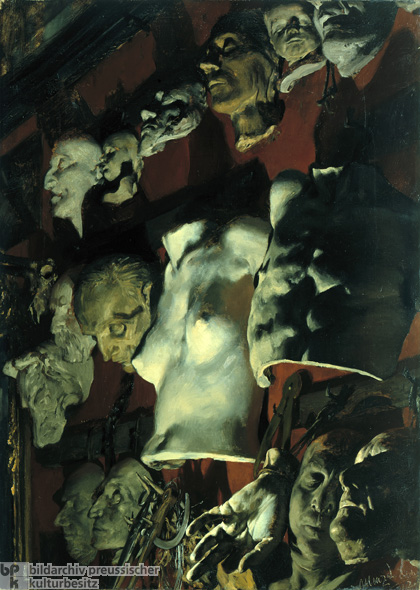
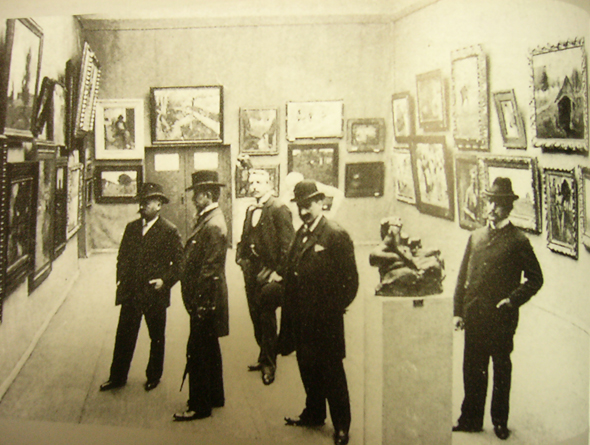
Saturday, June 13, 2009
Spring Awakening (The Play): Basic Facts
- Written sometime between autumn 1890 and spring 1891 by Frank Wedekind.
- Was Wedekind's first major play.
- First performed in 1906 in Berlin.
- Set in rural Germany in 1892.
- Written in German, translated to English.
- Story of German adolescents dealing with puberty that culminates in tragedy due to their lack of knowledge about what is happening to their bodies and in their lives.
- Focuses on three central teenage characters: Moritz Stiefel, Melchior Gabor, and Wendla Bergman.
- Also features other teenage characters who deal with entirely seperate problems, ranging from two boys discovering homosexuality and a runaway living the artistic bohemian life.
What is Dramaturgy?
LMDA "About Dramaturgy" Page
Dramaturgy is the contextualization of the world of the play, concerning culture, allusions, and connections in the text. It involves research into the time period of the play, the playwright's biography, and prior productions of the work, if they exist. Basically, dramaturgy involves doing anything one can do to help everyone involved in a play, from directors to actors to designers, make the best choices for the piece. For example, if an actor doesn't know exactly what the playwright's lines are saying, they may make assumptions and thus play the line entirely against what is "right." According to the LMDA, dramaturgs also offer opportunities for playwrights, generate projects and programs, and create conversations about plays in their communities.
"Connecting knowledge with practice to make informed choices." -Dave Mctier
Subscribe to:
Posts (Atom)
